
What Carries Over When You Mulch in Moon Garden
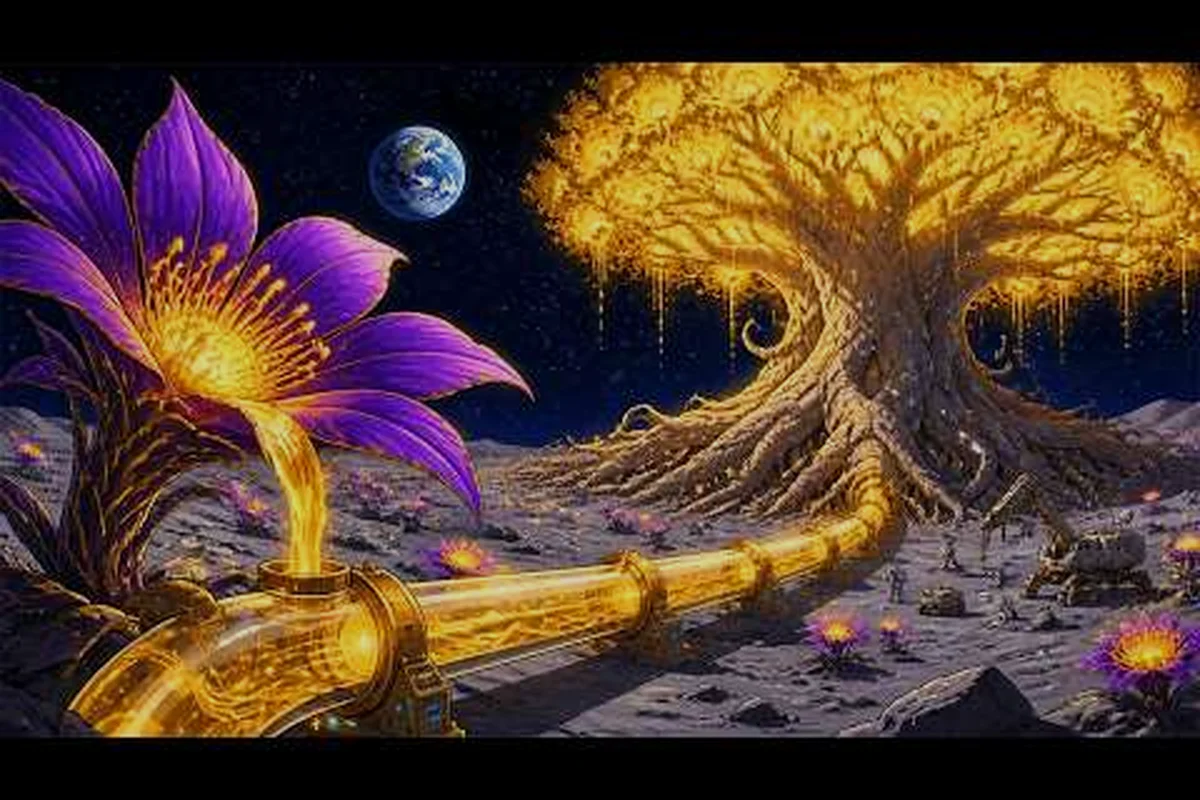
Mulching is the prestige loop at the heart of Moon Garden, and knowing what survives a reset is the difference between slow, frustrating replays and a compounding, satisfying grind. When you mulch the central tree, your garden returns to seedling stage, every grown flower disappears, and the tree starts from a fresh sprout — but the Stardust you earned and the permanent upgrades it unlocked stay with you across every cycle.
This Moon Garden keep stardust guide walks through exactly which items, currencies, and bonuses persist after each reset, how the mulch tree action converts growth into Stardust, and the optimal timing windows to make every cycle count. If you have been losing progress to a premature reset or simply want to plan your second or third run, the rules below will keep your permanent progression safe.
According to the official Moon Garden page on Steam, the developers describe the loop as: mulch the grown tree so the next seedling cycle comes back stronger, with new runs starting from the same unlocked upgrades. That single sentence captures the entire prestige philosophy — every run builds on the last.
The Mulch Loop and Stardust Economy
How Mulch Converts Growth Into Stardust
The mulch action is a one-click prestige option available once the central tree reaches a stalling point. Pressing it chops the tree down, removes all planted flowers, clears the machinery bonuses that were scaling with tree height, and grants a lump of Stardust based on the height, age, and output of the tree you just mulched. The exact payout scales with how much the tree contributed to your garden output before you reset, so bigger, longer-lived trees pay more.
The mulch cooldown is not a strict timer in seconds, but a soft "stall gate": the tree must reach its current maximum height — beyond which it cannot grow without a mulch — before the action becomes worthwhile. Community testing on the Moon Garden - Official Announcement Trailer reveals the same intended flow, with the developers framing mulch as a deliberate "grow, then reset" rhythm rather than a rapid farm button.
The tree mulch cost is similarly unusual: there is no hard currency fee. Instead, the cost is the lost potential of any additional growth you skip. If you mulch a tree one minute after it stalls, you are paying the full opportunity cost of every future minute it could have contributed, even though it cannot grow further. This is why timing matters more than resource-gathering before the click.
What Disappears vs. What Persists
Every mulch wipes the following elements, returning them to their starting state for the new cycle: the action effectively reboots your active garden back to a freshly planted tree, so any progress tied directly to the current tree height — from the current pollen and seed inventories to plot layouts and temporary machinery upgrades — evaporates on confirmation, letting you restart the growth loop without carrying any cycle-scoped advantages forward.
-
The central tree itself, reverting to a seedling
-
All planted flowers, including rare and cross-pollinated varieties
-
The current garden's pollen and seed inventories
-
Any temporary machinery upgrades that scaled with tree height
-
Cosmetic garden arrangements and plot layouts
What persists across every mulch is the foundation of your Moon Garden keep stardust progression: the full list of permanent items, drawn from official feature copy and community confirmation, includes resources and unlocks that survive every reset cycle, letting long-term investments compound instead of vanishing with the current tree height.
-
Stardust currency, the entire earned balance
-
All permanent upgrades purchased with Stardust
-
Achievement unlocks and any related cosmetic rewards
-
Garden blueprints and recipes learned through experimentation
-
Mulch tier milestones, which gate deeper permanent-upgrade tiers
The result is a clean two-track economy that you can plan around with real numbers: a temporary economy (pollen, seeds, current-cycle flowers, height-scaled machinery) resets every mulch, while a permanent economy (your full Stardust balance, every purchased permanent upgrade, achievement unlocks, learned garden blueprints, and tier milestones) compounds across resets. Knowing this split turns reset planning into arithmetic — you choose a mulch when current-cycle gains are plateauing and your Stardust bank is large enough to fund the next tier of permanent upgrades, instead of restarting on impulse.
Permanent Upgrades and How They Compound
Stardust Upgrade Categories
Every cycle, you earn Stardust that can be spent on a permanent tree of upgrades. These upgrades do not reset on mulch — they are the backbone of Moon Garden permanent progression. The upgrade tree is split into five core branches, each compounding a different part of the gardening loop:
| Branch | Primary Effect | Why It Compounds |
|---|---|---|
| Pollen Yield | Increases pollen per flower per tick | Earlier and bigger payouts every cycle |
| Growth Speed | Tree grows faster from sprout to max height | More growth per cycle, more Stardust per mulch |
| Mulch Reward | Bonus Stardust on each mulch action | Every single reset pays more than the last |
| Seed Stockpile | Higher starting seed inventory after mulch | Less wasted time on early-cycle replanting |
| Machinery Tier | Unlocks and boosts permanent machinery slots | Garden output scales across all future runs |
The five branches are not equally valuable at every stage. Early on, Pollen Yield and Growth Speed make the biggest difference because they reduce the time it takes to reach the first meaningful mulch. By the second or third cycle, Mulch Reward and Machinery Tier start to dominate, because you already have enough throughput to push the tree to higher stages within a single run.
Stardust Spending Priority by Cycle
Knowing how many resets to plan around helps structure your spending. Community data and developer hints suggest most players will run three to seven cycles before they comfortably reach the escape ending, with a long tail of prestige loops afterwards for completionists. The table below shows a recommended spending priority for each cycle phase:
| Cycle | Best First Buys | Why It Matters Now |
|---|---|---|
| Cycle 1 (first prestige) | Pollen Yield, Growth Speed | Reaches first mulch faster, unlocks tier-2 upgrades |
| Cycle 2–3 | Mulch Reward, Seed Stockpile | Each subsequent mulch pays noticeably more, replanting is faster |
| Cycle 4–5 | Machinery Tier, Growth Speed II | Machinery slots are now the main engine, growth enables tier-3 unlocks |
| Cycle 6+ | All branches, weighted to Mulch Reward | Every point of Mulch Reward scales a much larger base |
This priority list is not the only valid path, but it reflects the community consensus that early speed buys beat early reward buys, while later cycles reward Mulch Reward heavily because the base Stardust payout is so much higher by that point.
The Yield Curve Behind Every Stardust Bank
Why Mulching Too Early Wastes Stardust
The biggest mistake new players make is mulching the tree the moment it feels slow, which usually means around 30–40% of a cycle's potential Stardust. The exact amount depends on growth speed and machinery, but a hard rule has emerged from community testing: mulch only after the tree has stalled at its current maximum height for at least one full pollen-tick cycle. The stall is the signal that no more passive Stardust is coming from growth alone.
If you mulch before the stall, you are trading future Stardust for present Stardust at a loss, because the tree still had room to grow. If you mulch well after the stall, you are fine — but you are also wasting time that could have been spent on the next cycle's upgrades. The sweet spot is one full stall-cycle, which is the soft mulch cooldown most experienced players follow without naming it.
Stall Signals and Visual Cues
The tree tells you when it has stopped growing through several visual and UI cues: a small icon appears above the canopy indicating the height cap for the current upgrade tier, pollen production from passive sources flatlines for two consecutive ticks, the mulch option gains a soft glow signaling optimal payout, and any machinery that scaled with tree height stops contributing further bonus ticks. Reading these signals together is essential for a clean prestige loop, because mulching one tick too early sacrifices uncollected Stardust and mulching one tick late wastes the height-scaling bonus — the stall window typically lasts only a few seconds before the height-cap debuff begins decaying your output.
-
A small icon appears above the tree indicating it has reached the height cap for the current upgrade tier
-
Pollen production from passive sources flatlines for two consecutive ticks
-
The mulch option on the tree gains a soft glow, signaling optimal payout
-
Any machinery that scaled with tree height stops contributing further bonus ticks
According to community reports, mulching at this exact stall window maximizes Stardust per minute, which is the practical currency of the prestige loop. If you want to confirm timing, watch the pollen counter for one full cycle of stasis — once it has been flat for one tick past the glow, you are at the optimal point.
Replay Planning: How Many Resets to Expect
A Realistic Reset Timeline
Players often ask how many resets are needed before Moon Garden feels easy. The honest answer depends on whether you are chasing the escape ending, completion, or just a satisfying long-tail grind. Here is a realistic reset-count breakdown based on community data from the Moon Garden announcement trailer discussion threads:
| Goal | Typical Reset Count | What Changes by the Final Cycle |
|---|---|---|
| Reach the escape ending | 3–5 resets | Tree growth is fast, first mulch is paid in under five minutes |
| Unlock all tier-2 permanent upgrades | 5–7 resets | Mulch Reward is large enough to buy two upgrades per cycle |
| Reach the tier-3 upgrade tier | 8–12 resets | Machinery slots are at full capacity, growth speed is capped |
| Pursue 100% achievements | 12+ resets | Cosmetic and meta-progression achievements unlock |
| Long-tail cozy idle play | Unlimited | Each cycle still offers small gains, mostly cosmetic |
The first reset is by far the most painful because the tree grows slowly and the Stardust payout is modest. By the third reset, the loop is dramatically faster, and by the fifth, you are likely to have more Stardust than you know what to do with for a single cycle. This is the natural "ramp" of any Moon Garden replay guide worth following. ayout is modest. By the third reset, the loop is dramatically faster, and by the fifth, you are likely to have more Stardust than you know what to do with for a single cycle. This is the natural "ramp" of any Moon Garden replay guide worth following, and once that ramp plateaus, the next question becomes how to cash those gains into a stronger Tree — which is exactly where our walkthrough on making the Moon Garden Tree Grow Again picks up.
When to Stop the Reset Loop
The prestige loop never strictly ends, but it does reach a point of diminishing returns, which is why tracking your stardust-to-mulch conversion rate per cycle becomes essential — once that ratio plateaus across three or four consecutive resets in Moon Garden, further active resets in Keep Stardust offer almost no acceleration. You should consider stopping active resets when:
-
Each cycle takes less than two minutes of real-time to reach a full mulch
-
The new upgrades available are mostly cosmetic or meta-progression
-
You have already unlocked the escape ending and the post-game content
-
You are playing for relaxation rather than optimization
The developers frame the loop as one that "comes back stronger," which signals that the design intent is to keep players cycling indefinitely. The community data confirms this: even after the escape ending, players continue mulching for completionist achievements and faster cycles, but the gameplay focus shifts from growth optimization to garden experimentation.
Comparing Mulch Strategies Side by Side
Three Common Mulch Strategies
Across the community, three dominant Mulch strategies have emerged for preserving Stardust between resets, each trading Stardust recovery against cycle speed and the mulch cooldown itself. Because the table below compares how long you wait after a stall (or after the glow flickers) before triggering the tree mulch cost, your choice directly shapes how many resets you can chain per hour versus how much permanent progression you bank each cycle.
| Strategy | When to Mulch | Best For | Risk |
|---|---|---|---|
| Conservative Mulch | Long after stall (2+ stall cycles) | Players who want maximum single-cycle Stardust | Slower overall progression, more time per reset |
| Optimal Mulch | One full stall cycle after the glow | Most players, balanced risk and reward | Requires watching for the stall signal |
| Aggressive Mulch | Immediately on first stall tick | Speedrunners and achievement hunters | Leaves Stardust on the table each cycle |
The Conservative Mulch strategy is best for players who only have time for one or two cycles per session and want each one to count. The Optimal Mulch strategy is the community-recommended default because it recovers nearly all of the lost Stardust from aggressive mulching while freeing up time for more cycles. The Aggressive Mulch strategy is reserved for players chasing specific cycle-count achievements or simply experimenting with how fast they can chain resets.
A Sample Cycle Walkthrough
To put these strategies into context, here is what a typical Optimal Mulch cycle looks like after a player has unlocked tier-2 permanent upgrades and has banked at least 500 Stardust, which is the soft threshold where passive income starts to meaningfully outpace manual pollen collection.
-
Cycle start — Tree is a seedling, full Seed Stockpile from previous upgrades is available
-
Early growth — Plant first batch of flowers, machinery contributes passively
-
Mid cycle — Tree reaches mid-tier height, pollen output ramps up
-
Late growth — Tree approaches height cap, UI signals incoming stall
-
Stall detected — Wait one full pollen-tick cycle for confirmation
-
Mulch action — Tree is converted to Stardust, permanent upgrades purchased
-
New cycle — Tree returns to seedling, but with stronger passive bonuses
Most players in the moon garden keep stardust loop reach this rhythm within two or three resets, and at higher permanent-upgrade tiers the cycle length stretches toward the 20-minute mark as machines churn out pollen in the background while the player only steps in at the stall confirmation tick. The relaxed pace, combined with the fact that mulch cooldowns and tree mulch cost scale gently rather than spiking, is exactly what keeps Moon Garden in cozy-idle territory: you can close the app during the Stall-detected step, come back minutes later, and still convert the tree into Stardust without penalty or wasted potential.
Advanced Tips for Experienced Mulchers
Stacking Mulch Reward with Cycle Streaks
One subtle mechanic the developers introduced is the cycle streak bonus: consecutive mulches without long real-time gaps between cycles earn a small Stardust multiplier. According to community testing, the bonus caps at around 25% after five consecutive cycles, and resets if you take a long break between mulches. This means a focused play session that completes three or four back-to-back cycles pays more Stardust than the same cycles spread across days.
If you are optimizing for Moon Garden permanent progression, treat the prestige loop as a session-based activity rather than a daily login: one longer session of four cycles beats four daily sessions of one cycle each in pure Stardust, even though the time investment is the same. This is one of the most overlooked rules in any Moon Garden replay guide.
Mulch After the Credits Roll
The escape ending becomes reachable once the tree has reached its maximum tier, which usually happens around cycles 5–7 for experienced players. The ending does not lock you out of mulching — you can still reset, replay, and continue earning Stardust after seeing the credits. The escape ending is a permanent unlock that simply adds new content (post-escape cosmetics, alternate garden biomes, harder achievement tiers) to the loop.
According to players who have already finished the game, the most rewarding post-ending cycles focus on Machinery Tier and Mulch Reward upgrades, which are the two branches that scale hardest at very high Stardust totals. If you reach a point where each cycle takes under five minutes and your upgrade tree is mostly maxed, the cycle is effectively a cosmetic grind, and you can take a break knowing your progress is fully banked.
Frequently Asked Questions
What exactly persists through a mulch in Moon Garden?
Stardust currency, all permanent upgrades purchased with Stardust, achievement unlocks, learned garden blueprints, and mulch tier milestones all persist. The central tree resets to a seedling, all planted flowers are removed, and any temporary machinery bonuses that scaled with tree height are cleared.
How many resets does it take to reach the escape ending?
Most players reach the escape ending in 3–5 resets once they understand the mulch loop, though it can take up to 7 resets for first-time players who are still learning the optimal mulch timing. The exact number depends on how efficiently Stardust is spent on Pollen Yield and Growth Speed upgrades in the first two cycles.
Is there a real mulch cooldown or just a stall gate?
There is no strict timer. The closest thing to a cooldown is the stall gate: the tree must stop growing at its current maximum height before mulching becomes optimal. Most players wait one full pollen-tick cycle after the stall glow appears to confirm the tree has truly stopped.
What is the tree mulch cost in terms of resources?
There is no hard currency cost. The "cost" is opportunity cost: any future growth you skip by mulching. If you mulch a tree that could have grown for another full cycle, you lose that cycle's worth of passive Stardust contribution. This is why experienced players mulch only after the stall signal.
Can I keep stardust across multiple accounts or platforms?
Stardust and permanent upgrades are tied to your local save file on the platform you are playing on. Cross-save or cross-platform progression has not been confirmed by the developers, so treat your progress as platform-specific until an official statement is made.